
Mass Timber + the Future of Campus Design
Mass timber is moving from a niche option to a primary structural system. On university campuses, it is reshaping student housing and academic buildings as institutions pursue more efficient and lower-carbon construction.
Within Hanbury, Dustin Albright, Jared Coffin, and Kendall Roberts have contributed to this work through their involvement with Clemson University’s Wood Utilization + Design Institute (WU+DI). Dustin was a founding member of the Institute when it formed in 2013, with a mission to advance the responsible use of wood in the built environment. This involvement reflects a broader position: mass timber is not simply a material choice, but a structural approach aligned with environmental and economic priorities.
Three recent projects, Western Carolina University’s Lower Campus Residences, Princeton University’s Hobson College, and Western Michigan University’s Valley Oaks residence hall, demonstrate how these ideas take shape in practice. Each relies on mass timber construction while responding to distinct institutional priorities, underscoring the importance of aligning design strategy with a university’s broader ambitions from the outset.
Western Carolina University Lower Campus Residences
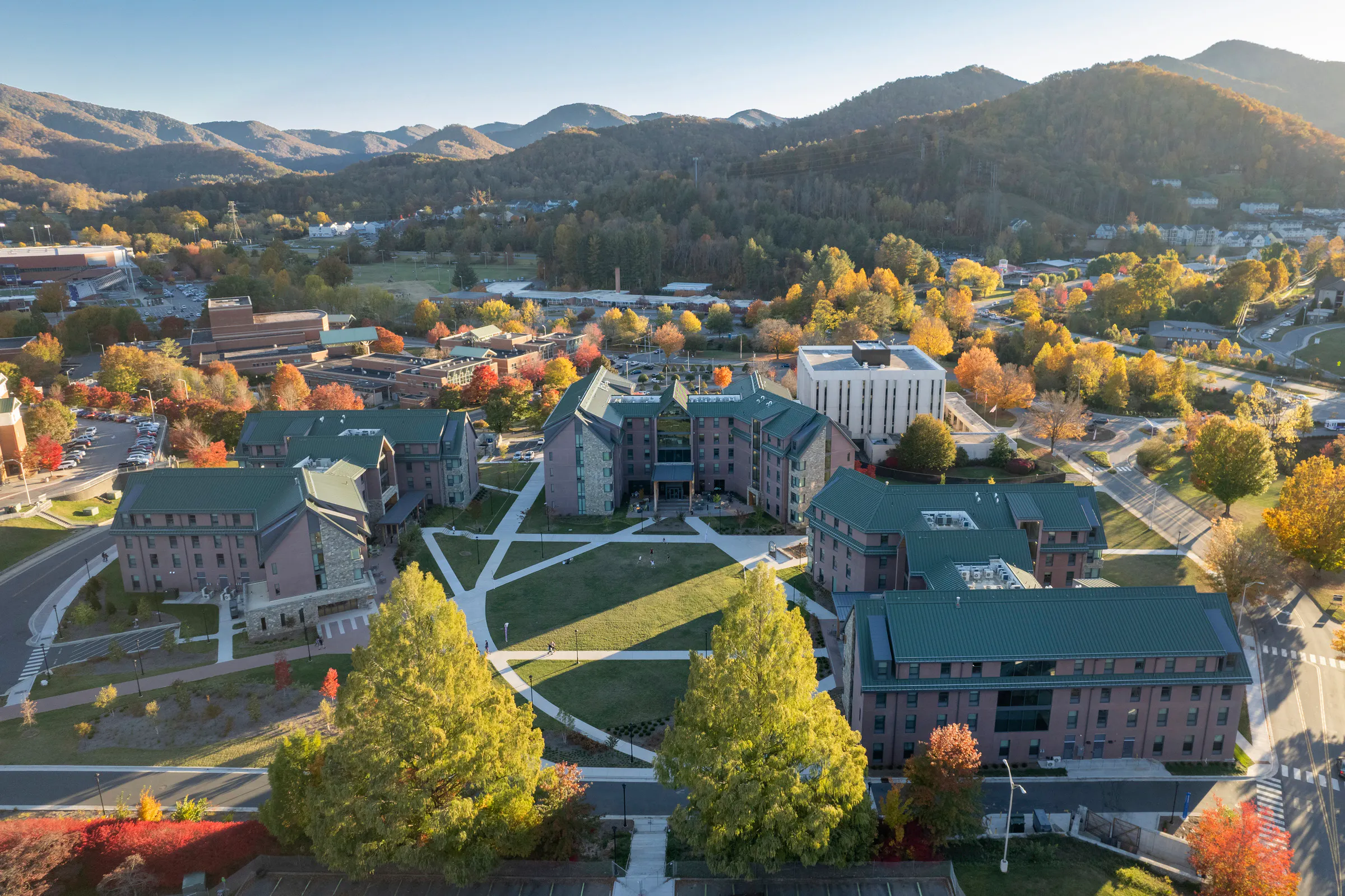
At Western Carolina University, strengthening the campus’s relationship to its landscape and supporting student well-being were primary drivers for a recent student housing redevelopment. Located in Cullowhee, North Carolina, within the Blue Ridge and Great Smoky Mountains, WCU’s student body is closely tied to an outdoor lifestyle. When the opportunity arose to replace two outdated residential towers, the project focused on creating a more connected residential environment.
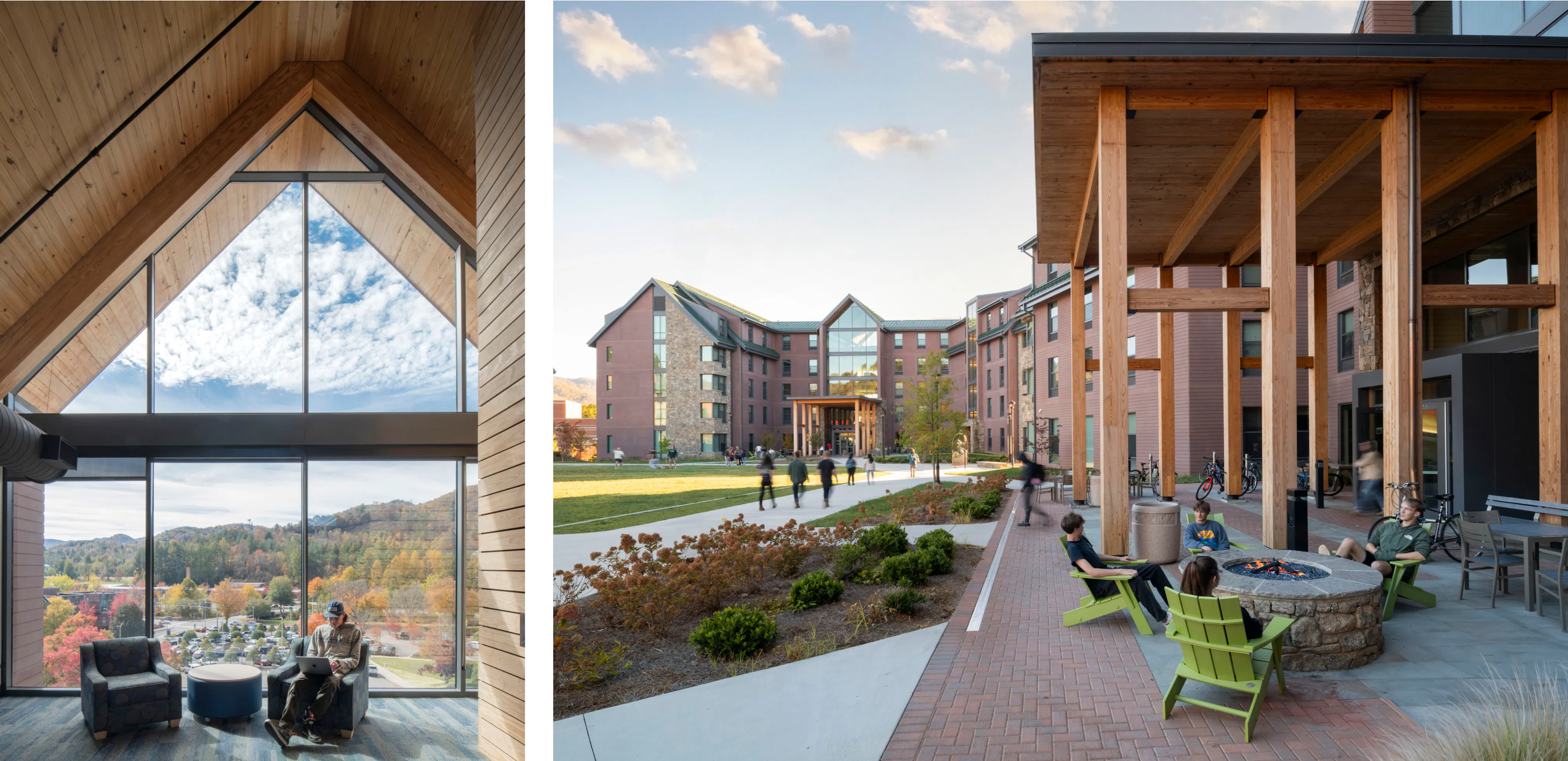
The three new residence halls are arranged around a central courtyard with porches, fire pits, and hammock areas that frame views of the surrounding mountains and support informal gathering.
The buildings are scaled to better match the campus context than their predecessors, and are constructed of cross-laminated timber (CLT) and other materials sourced and manufactured within the United States. CLT is expressed in shared interior spaces, reinforcing the connection to the surrounding landscape.
Princeton University Hobson College
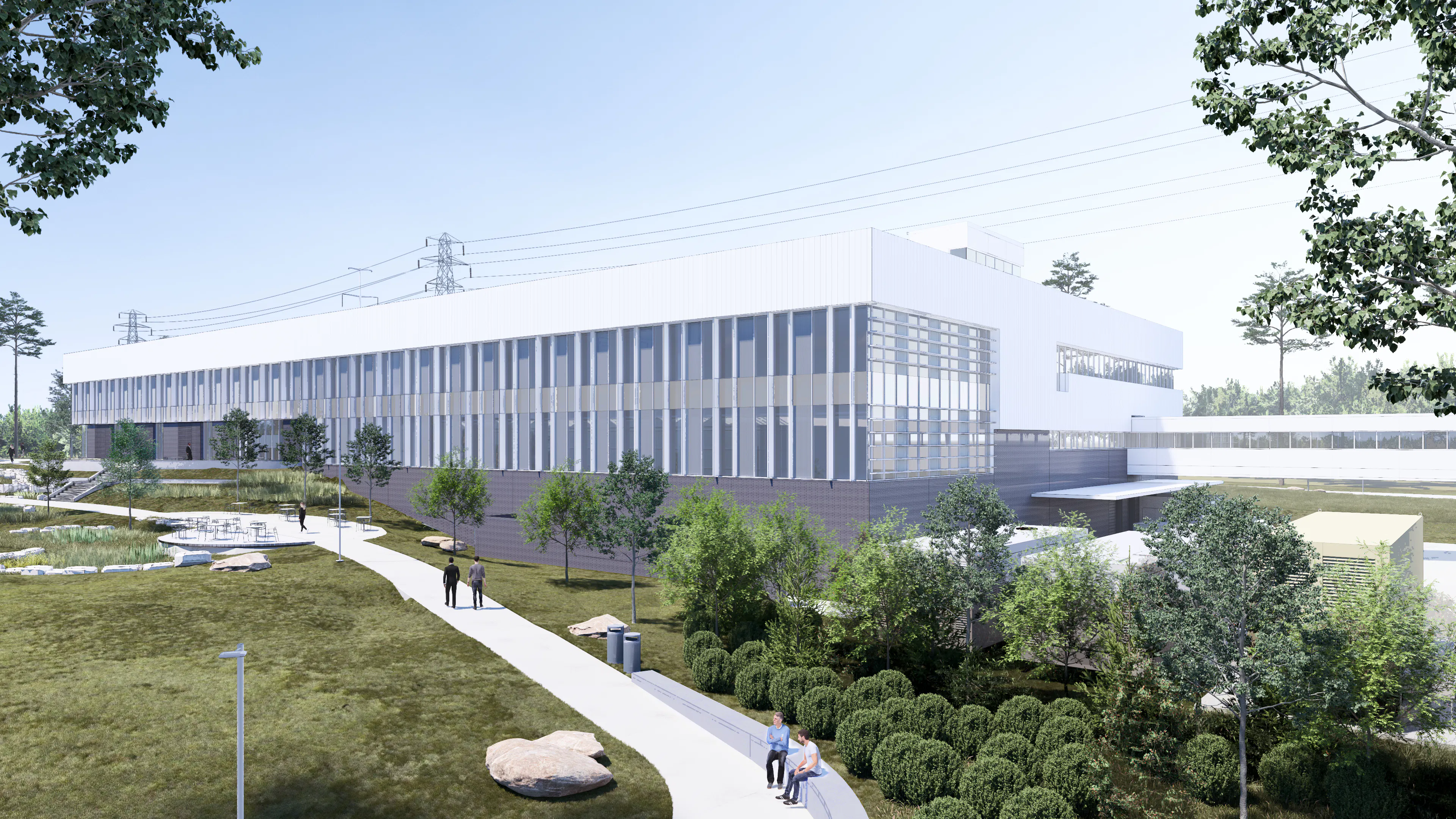
The motivations for mass timber began in a different place at Princeton. As part of its commitment to achieve carbon neutrality by 2046, the university has made significant investments in sustainable campus development.
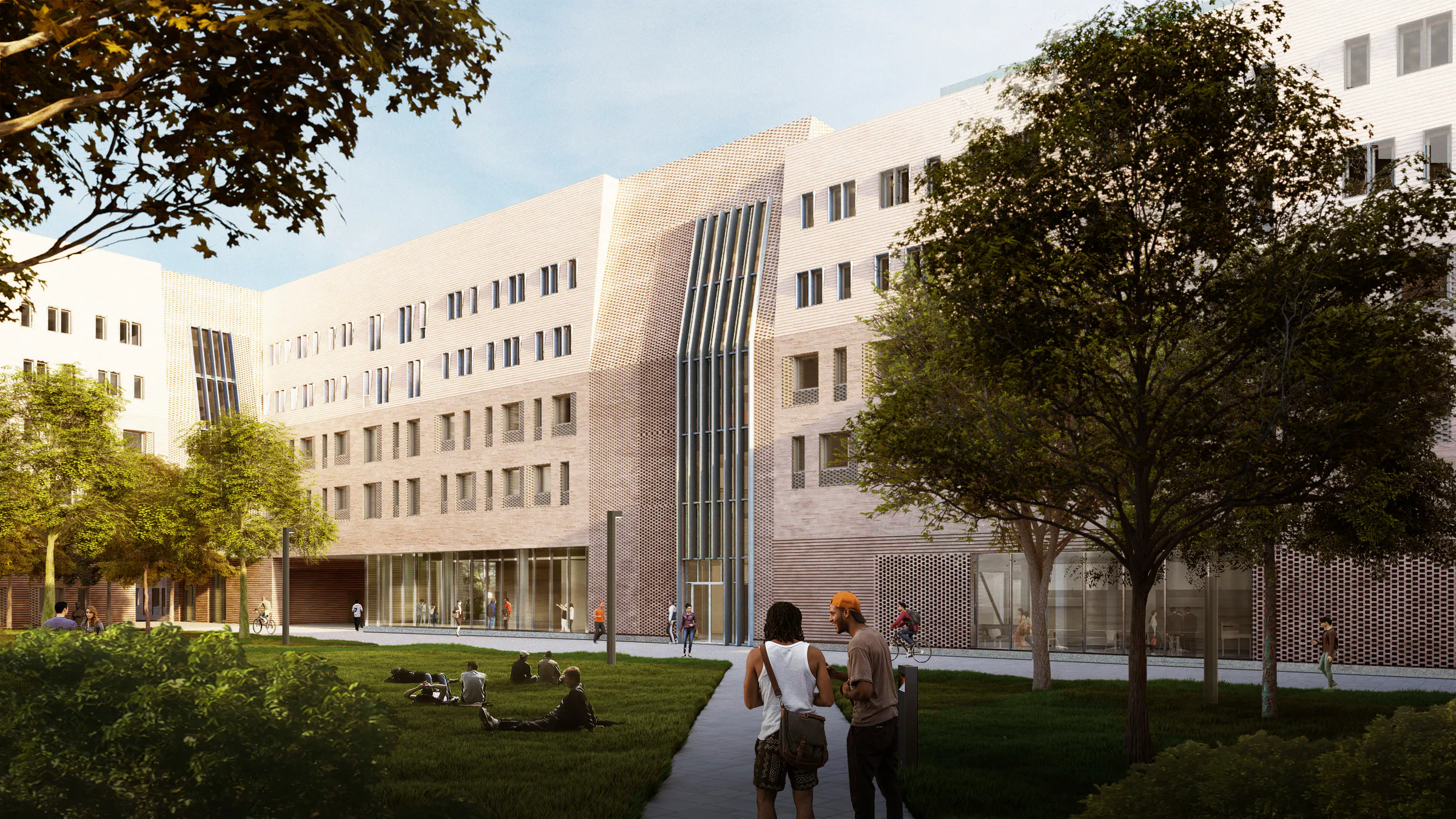
For Hobson College, one of the newest additions to Princeton’s residential college system, mass timber became a key strategy for reducing embodied carbon. Wood stores carbon over its lifecycle, offering a lower-carbon alternative to conventional materials.
Exposed timber aligns with Princeton’s emphasis on creating healthy, inspiring environments for students. The warmth, tactility, and natural character of exposed wood shape interiors that feel both grounded and uplifting.
Western Michigan University Valley Oaks Residence Hall
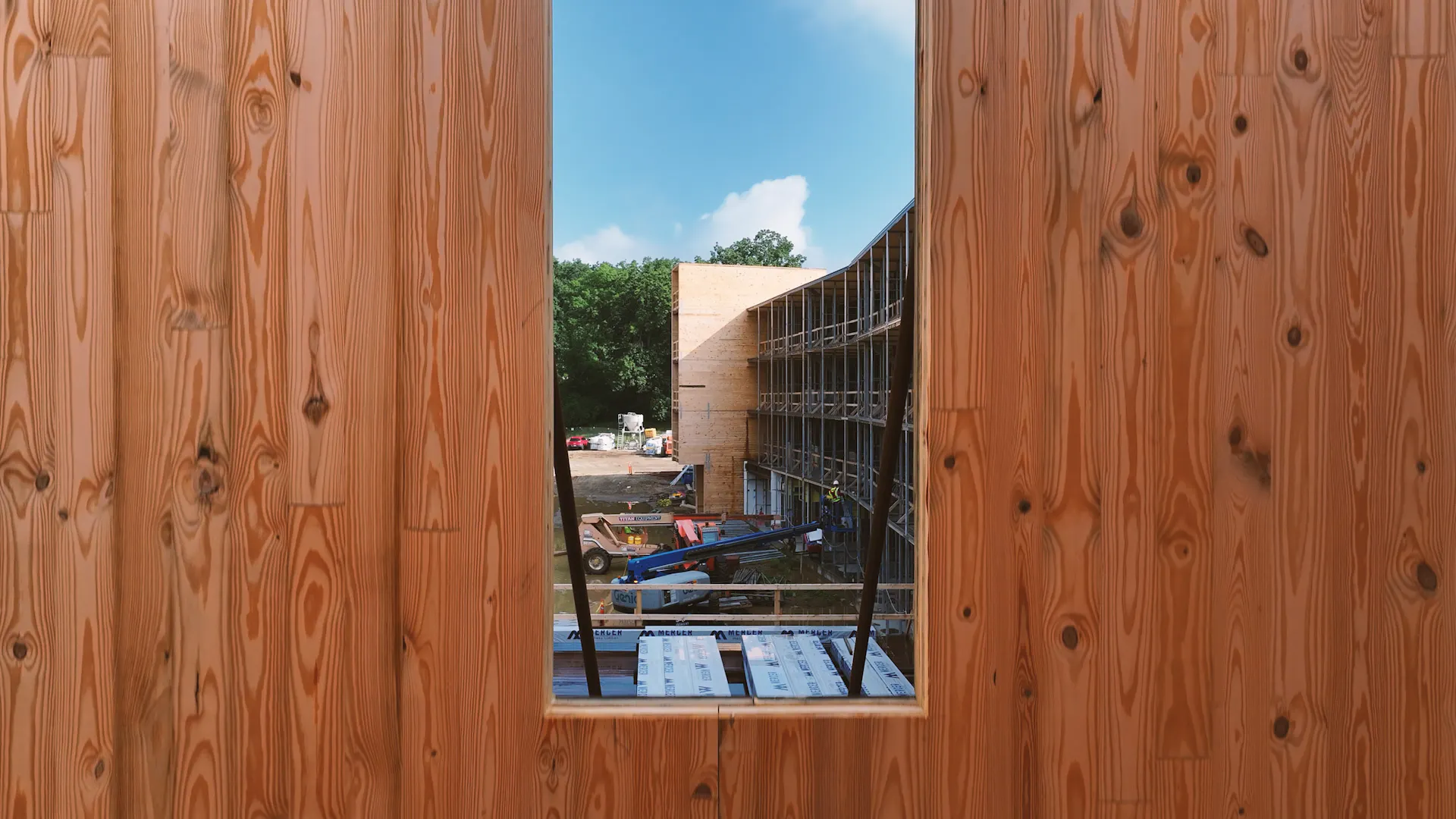
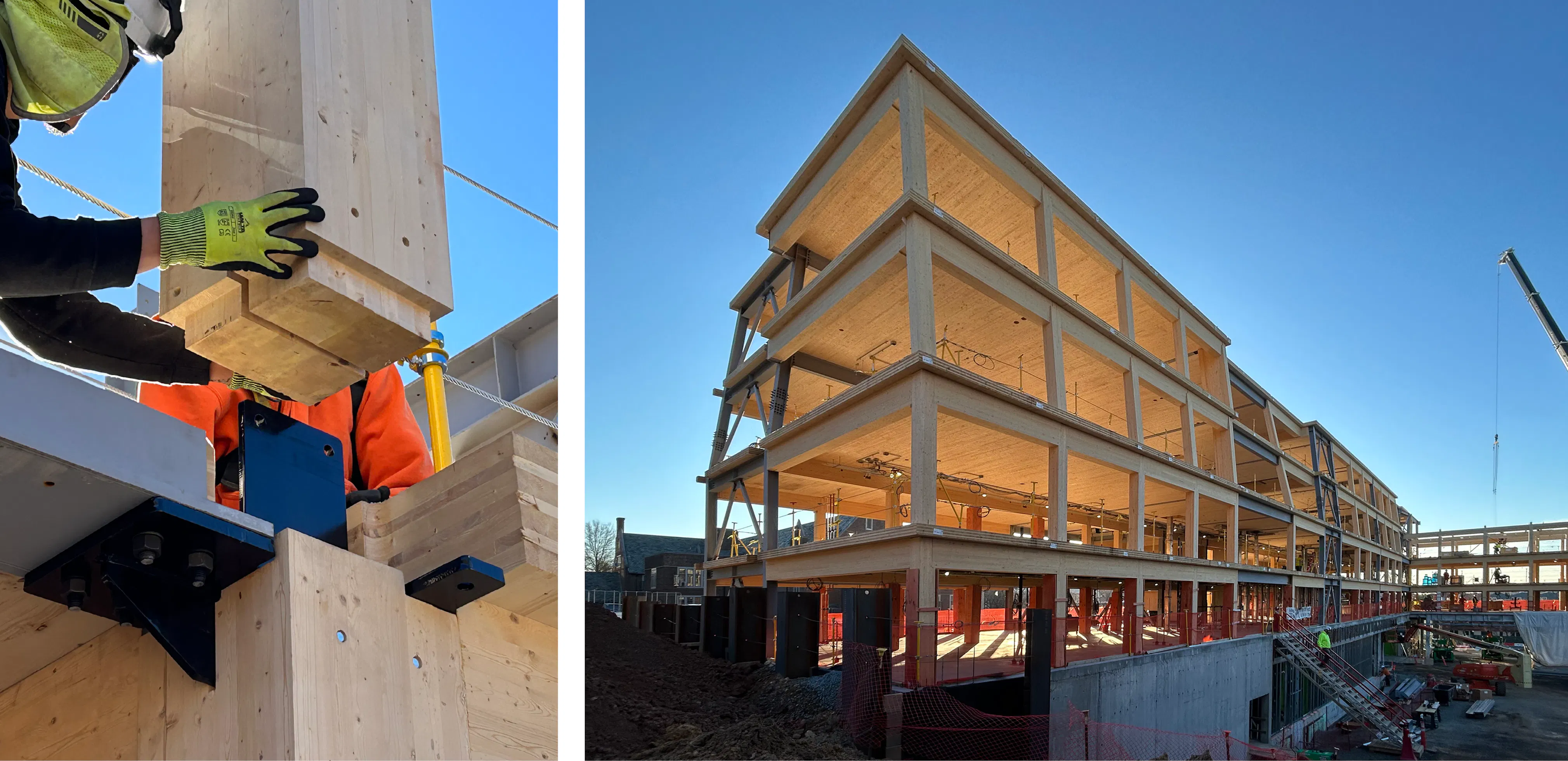
At Western Michigan University, the starting point was more pragmatic. The university sought to deliver high-quality student housing while remaining competitive with market-rate off-campus options. To support financial viability, the design team explored how mass timber’s prefabrication capabilities could enable a more efficient construction process.
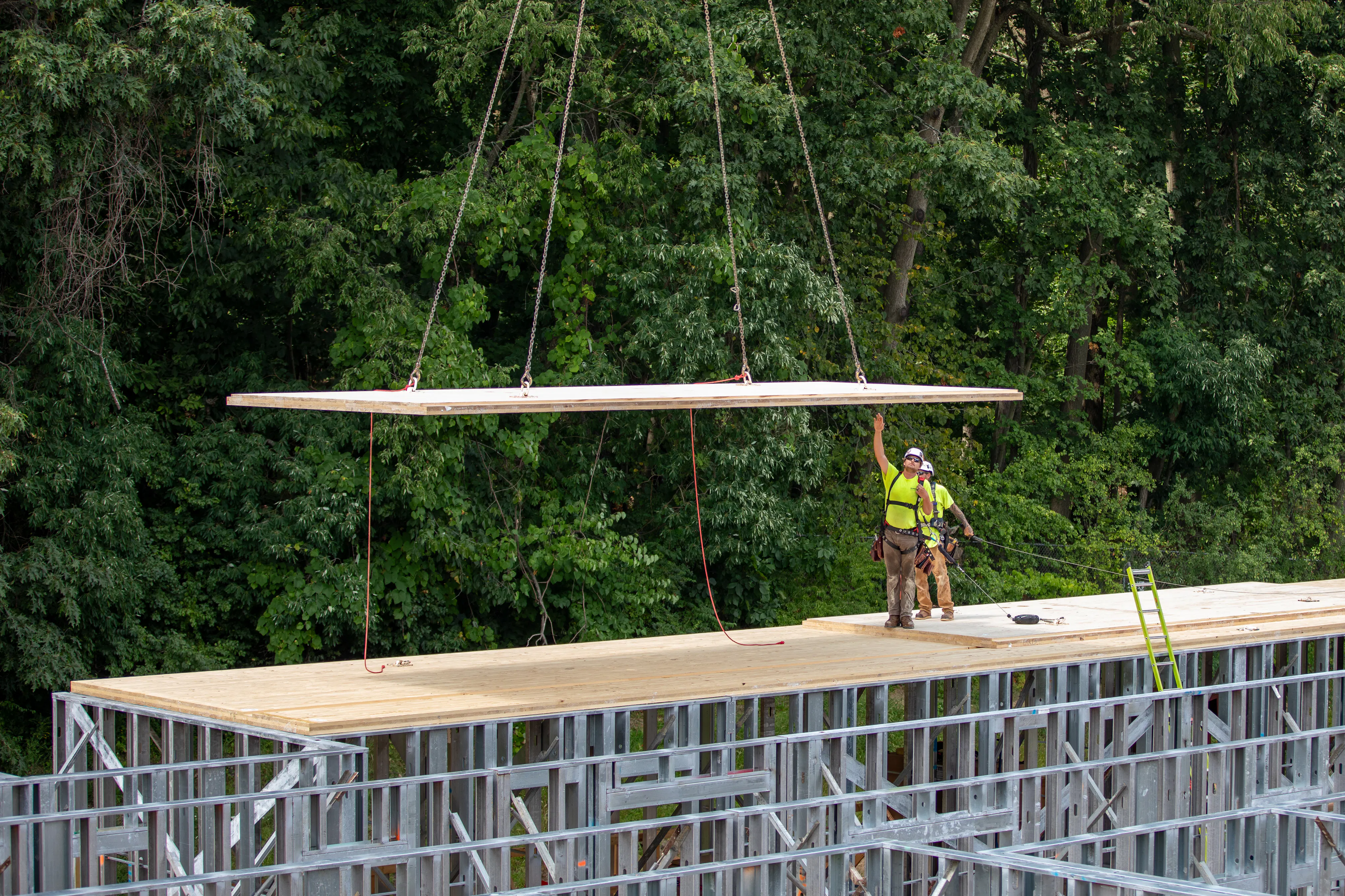
Working closely with engineers and contractors, the team optimized structural spans to reduce material use while maintaining the character of exposed timber interiors. Prefabricated components are manufactured off-site and assembled on campus, compressing the construction schedule and improving cost control while supporting project quality.
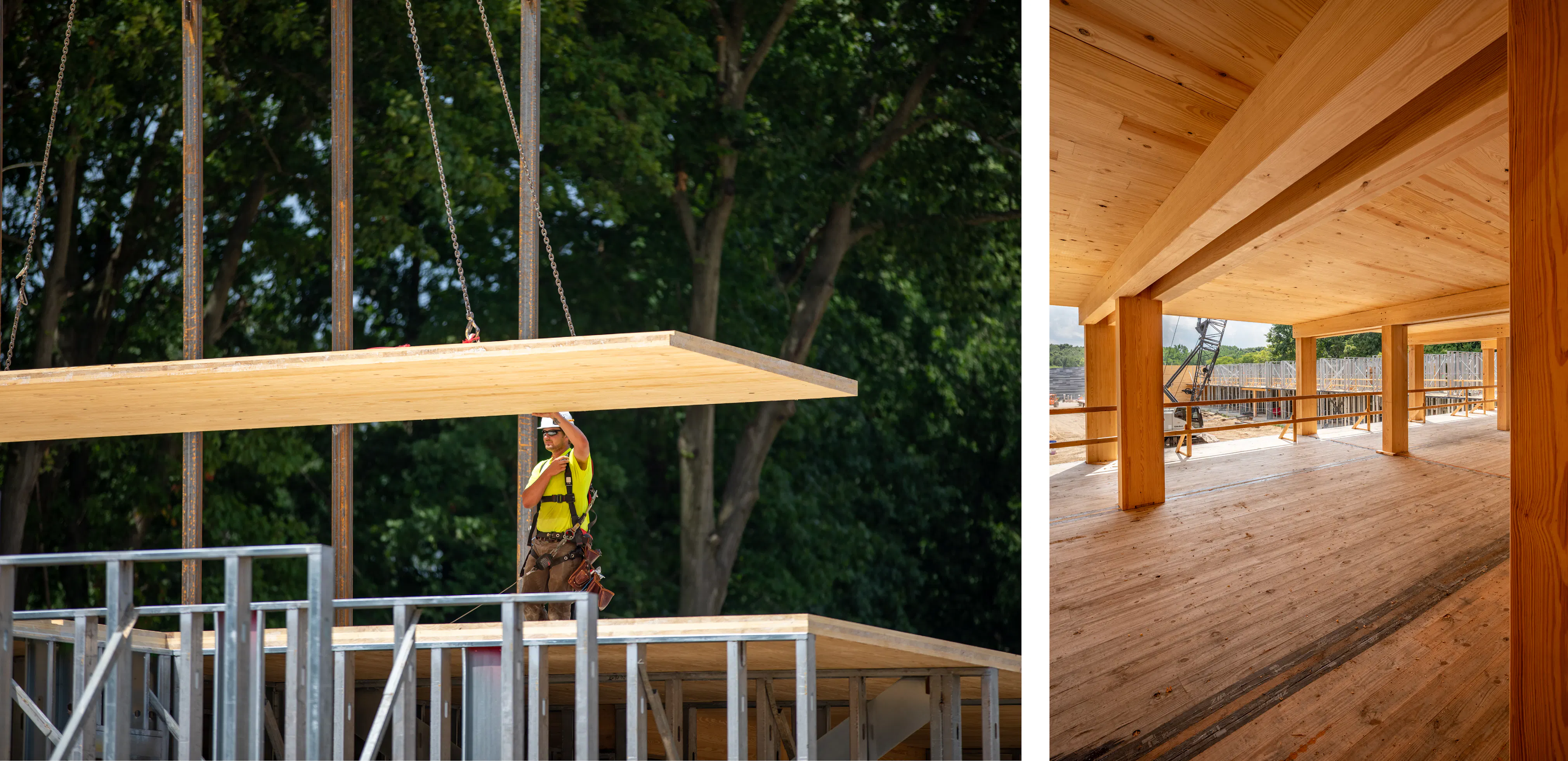
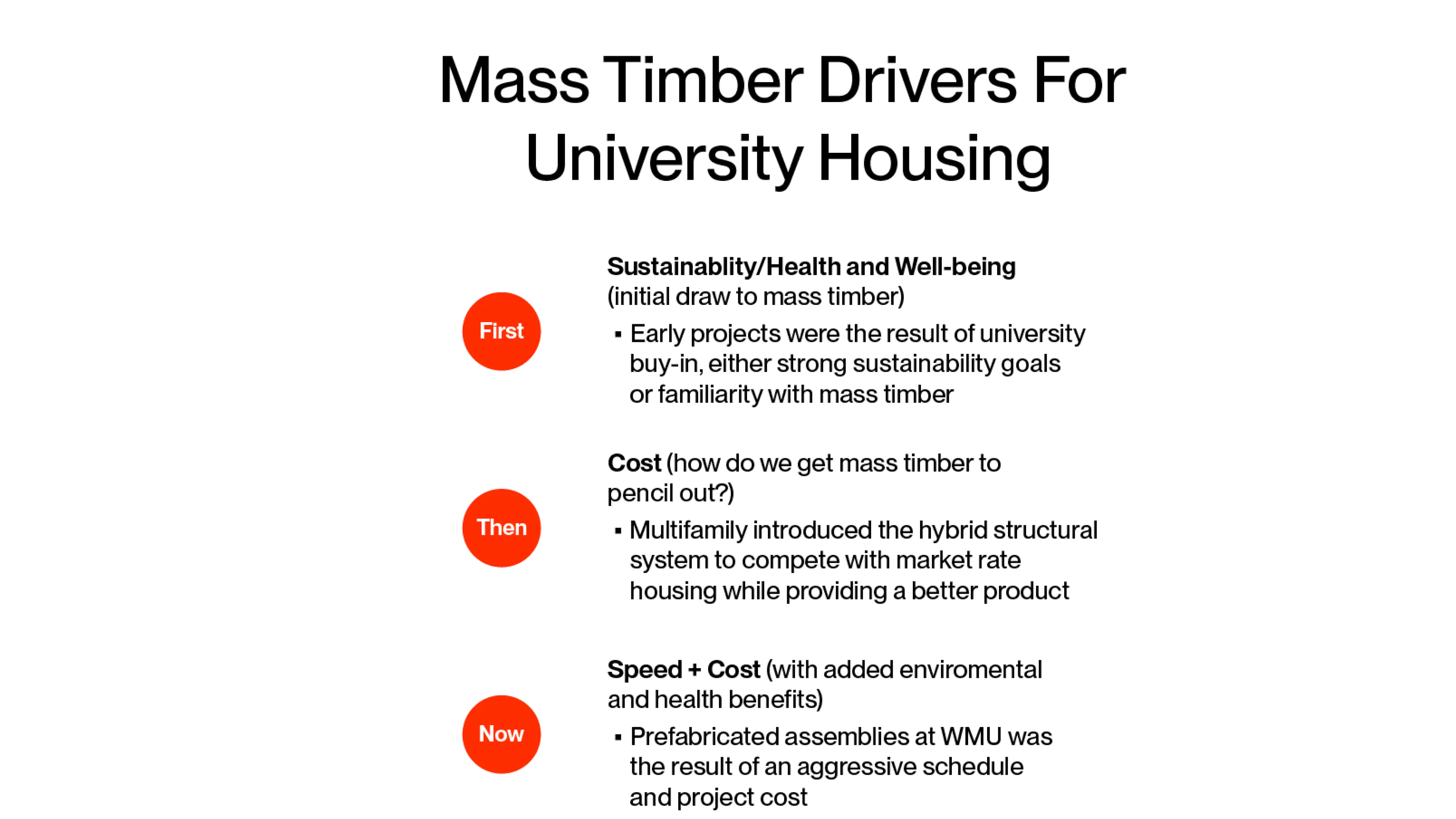
The drivers for Western Carolina, Princeton, and Western Michigan differ, but the projects share a common lesson: successful mass timber buildings begin with a clear understanding of institutional priorities. Structural systems are not only technical decisions; they shape environmental performance, construction timelines, and the experience of the people who use these spaces.
In many projects, sustainability and occupant wellbeing are primary considerations. Mass timber’s ability to reduce embodied carbon makes it a compelling option for institutions seeking more responsible buildings. Cost considerations follow, where hybrid structural systems can compete with conventional construction while maintaining architectural quality.
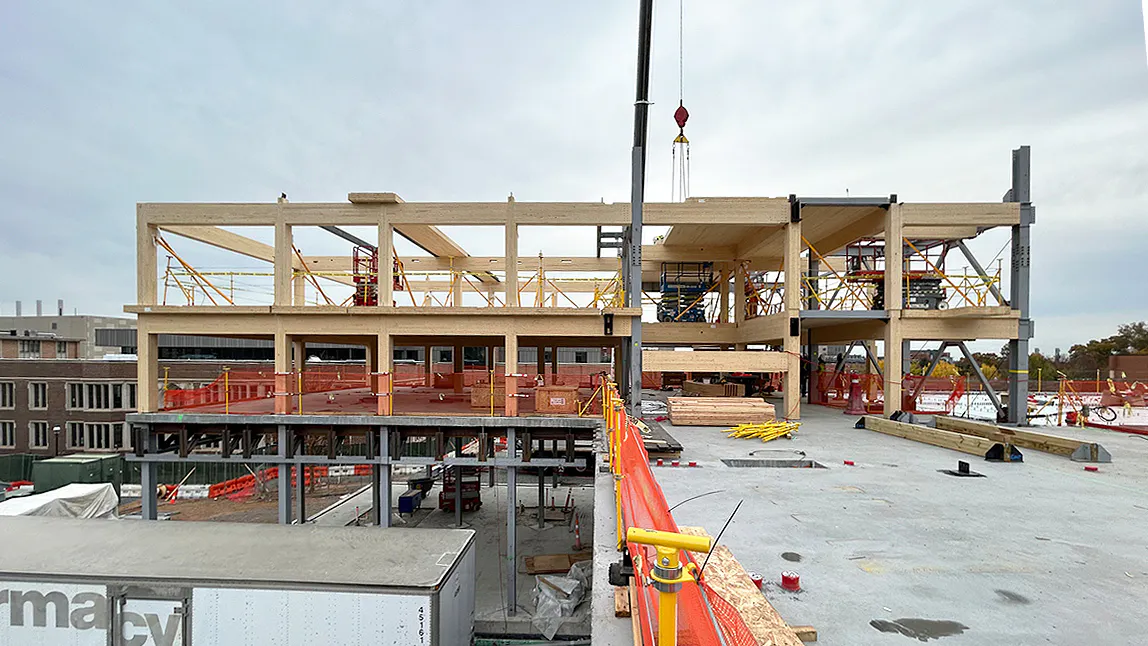
Constructability and speed also play a critical role. Prefabricated timber components can be manufactured with precision and assembled rapidly on site, supporting compressed schedules and minimizing disruption to active campuses. Western Michigan’s Valley Oaks demonstrates how this approach can align budget and schedule, while still delivering the environmental and experiential benefits associated with timber construction.
Together, these projects demonstrate how mass timber, when aligned with institutional priorities, can shape both building performance and campus experience. As the system matures, it is redefining how campus buildings are conceived and delivered as both material system and design strategy.