Finland’s Lesson for the South
A South Carolina delegation traveled to Finland to study one of the most technologically advanced wood economies. What they observed points to a different future for the American South.
The graphic paper economy that helped define much of the rural American South for a century is in structural decline. Global production of newsprint, printing, and writing papers has fallen sharply since its mid-2000s peak as readers, advertisers, and offices have moved online. The forests themselves, however, remain extraordinarily productive. The question of what to do with the large volumes of small-diameter pulpwood that historically supplied the mills is now central to the rural economy of the American South. It is also a question Finland has been answering, deliberately and at the national level, for over a decade.
This past April, a twelve-person delegation from South Carolina traveled to Helsinki, Lahti, and Espoo to study Finland's forest-bioeconomy and advanced wood manufacturing ecosystem. Organized by Clemson University's Wood Utilization + Design Institute (WU+DI), the group was deliberately cross-sector, including foresters and mill operators, public officials and economic developers, biomaterials researchers, engineers, and designers.
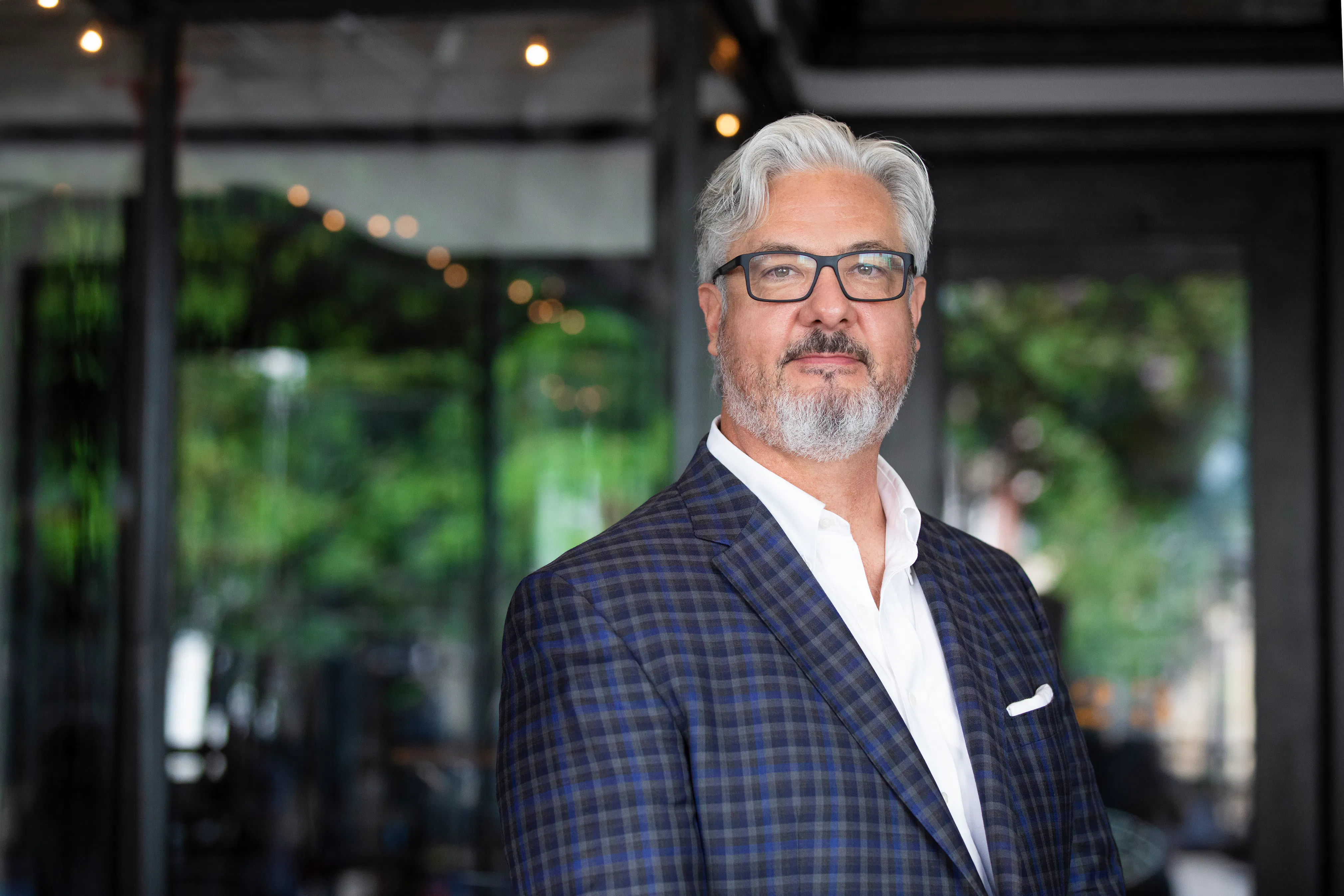
Among them was Jared Coffin, Hanbury Design Principal and longtime WU+DI member. He went to Finland expecting to learn more about cross-laminated timber. He came back, by his own account, talking about something else entirely. Here, Coffin discusses what the delegation saw, what surprised him, and what it suggests for the future of the Southeast's forest economy.
You came on this trip as a mass timber expert. What did you expect to find in Finland?
Jared Coffin: I expected to come home talking about CLT. Finland is one of the countries we as architects cite when arguing for what is possible with wood. Stora Enso is among the world’s leading producers of cross-laminated timber. Versowood has a mature Finnish glulam and engineered wood manufacturing culture. Wood City is a working mass timber block on Helsinki’s waterfront. Supercell’s headquarters is one of the country’s most sophisticated mass timber office buildings. The case studies practically write themselves, so I assumed the trip would deepen that case.

And what did you actually find?
JC: That mass timber in Finland is a supporting strategy. In Finland's roundwood stream, pulpwood accounts for nearly 60 percent of the total wood consumed each year. That's the smaller-diameter material that has historically gone into paper, board, and pulp. Saw timber, the higher-grade material that becomes lumber, structural members, and engineered wood products, accounts for much of the remainder.
As architects, we tend to fixate on the saw timber side of the system. In Finland, they are focused on the pulpwood.
Because that pulpwood is no longer going where it used to.
JC: Right. The graphic paper market has been in structural decline for years, and the Finns reached that fork in the road earlier than we did. They asked a more ambitious question. What are the highest-value products we can make from this fiber? One expression of that shift is nanocellulose, an engineered material derived from the same cellulose fibers that go into paper and paper towels but processed at the nanoscale into something with very different properties.
In the right form, it can have extraordinary strength-to-weight performance. It is bio-based and biodegradable under the right conditions. It can be made into transparent films. And it has potential applications as a substitute or reinforcement in packaging, textiles, composites, coatings, and construction materials. It is a clear example of the Finnish strategy. They do not treat pulpwood as a low-value residue. They treat it as feedstock for a new generation of higher-value bio-based materials.

You spent time at VTT, Aalto, and LUKE. What struck you about those institutions?
JC: Finland has built a coordinated ecosystem in which research, design, and commercialization sit unusually close together. VTT, the national applied research center, does the pilot scale work that tests whether a lab discovery can become a manufacturable process. Aalto University’s CHEMARTS program is genuinely unusual. It is a design and materials platform where chemists, designers, and students work together on bio-based materials. LUKE, the Natural Resources Institute Finland, studies how the forest resource is measured, managed, owned, renewed, and understood over time. FinnCERES, the joint Aalto / VTT materials-bioeconomy flagship, helps connect that science to industrial applications and future markets.
These institutions share researchers, students, facilities, programs, and industry-facing projects. The result is that discovery, prototyping, scale-up, and commercialization are treated as parts of the same system.
Where does mass timber fit in that picture?
JC: Mass timber is real and impressive, but in Finland, it felt like the gateway instead of the destination. Stora Enso’s CLT production exists because there is demand for lower-carbon building systems. Wood City exists because Helsinki chose to demonstrate what dense, urban wood construction could look like. Supercell’s headquarters exists because a global technology company saw mass timber as both a sustainability statement and an extraordinary place to work.
These projects matter because they make wood visible as a modern, urban, high-performance material. They help build the market, the codes, the design expertise, the manufacturing confidence, and the public imagination that a larger forest bioeconomy depends on. But the deeper lesson is that Finland is not only asking how to build with wood, but how to turn the entire forest resource, sawlogs, pulpwood, residues, fibers, and side streams, into higher-value products.


What do you think this means for South Carolina?
JC: South Carolina's forest base is, by any measure, extraordinary. We grow substantially more wood each year than we harvest: 50 percent more softwood and 73 percent more hardwood by volume, according to the South Carolina Forestry Commission. Our forests are productive, overwhelmingly privately owned, and central to the region's rural land economy. The resource is enviable. What we lack is the system around it.
As demand for traditional paper continues to decline here too, the pulpwood side of the tree is under pressure. Finland has treated that material as a launchpad for higher-value products. We have not yet built the equivalent ecosystem: the design-research culture of CHEMARTS, the applied scale-up capacity of VTT, or the nationally coordinated forest-bioeconomy strategy that connects landowners, researchers, manufacturers, investors, and designers.
We have the raw material. What we still need is the imagination layer.
The delegation included Mayor Jay Doyle from Georgetown. How does his work fit into this?
JC: Mayor Doyle’s emerging vision for a mass timber innovation district in Georgetown, a regional hub for manufacturing, applied research, workforce development, and demonstration projects is exactly the kind of anchor idea that could begin to pull a regional economy upstream. Pair that with modular mass timber construction for affordable and workforce housing, and you have a use case that addresses two pressing problems at once: the housing shortage and the need for new, higher-value markets around South Carolina’s forest economy. That is the near-term, buildable opportunity.
Mass timber is something we can do now. It creates visible demand for wood, gives manufacturers and fabricators a reason to invest, builds local skills, and brings the forest into the built environment in a way the public can see and touch.
And the longer game?
JC: The longer game is the bioeconomy itself. A CHEMARTS-style materials innovation hub in South Carolina, partnered with WU+DI and built around formal relationships with institutions like VTT and Aalto, would give us a place where forest economics, materials research, design, manufacturing, and entrepreneurship meet.
Think nanocellulose, biocomposites, sustainable textiles, advanced packaging. Those are the kinds of higher-value markets where the next generation of forest-based companies will be built. Finland did not build this ecosystem in a year. But it started by connecting the right people, the right institutions, and the right facilities, and by giving them a shared place to work.


You've said the delegation's composition was as important as the destination. Why?
JC: Because Finland’s edge is not a single institution or a single material. It is the coordination of many roles around one resource. WU+DI built the delegation around that same premise. Foresters, lumber producers, engineers, public officials, economic developers, biomaterials researchers, and designers were all in the same van for a week. That composition is what implementation in South Carolina will require. If a state wants to learn from Finland’s forest-bioeconomy model, it cannot send only the architects or only the foresters. It has to bring the whole system into the conversation, and those people have to learn to speak each other’s language.
A final question. What stays with you from this trip?
JC: The reminder that buildings are part of a much longer chain. A material specification travels backward through the supply chain, to a mill deciding whether to invest, to a logger deciding what can be harvested profitably, and ultimately to a landowner deciding whether a stand of pines is worth keeping in forest cover or selling for development. Finland’s architects, researchers, public officials, manufacturers, and forest owners appear to be working from a shared map, and that map covers far more than what gets built.
The market is shifting. The strategy is sitting in plain sight. Use mass timber to build demand and public confidence now and use biomaterials to move the whole forest economy toward higher value over time. It is ambitious, but entirely within reach.